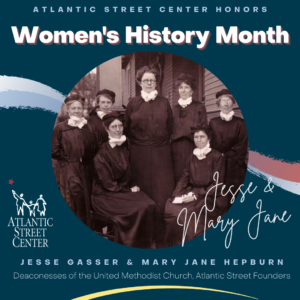
Now that it is Women’s History Month and Atlantic Street Center (ASC) just celebrated its 112th year, what do you believe is the significance of the women founders of ASC? Again thinking back to the founders of ASC, how does their work partly define or support your leadership and the future of ASC? What progress have we seen in women as leaders in our society? What should we be celebrating? Who is a woman from history that inspires you? What about a woman from the present? There are so many, but I would say Michelle Obama (fellow Chicagoan, keen and compassionate woman who is unapologetically “Michelle”); and Ellen DeGeneres (her sense of humor and sharp wit). What is something you would tell your younger self or young girls? What is a good book, TV show, movie, documentary, or work of art centered on a woman or a group of women that you recommend? It could be a book you’re reading now or a movie that has stuck with you over the years. I also really appreciate Freda Kahlo. She never surrendered who she was. Her art was so, “If you don’t like it, look in the other direction.” But wow, did make you look! For this Women’s History Month, we hope you take space to reflect, research, or thank a woman that continues to inspire you. Be on the lookout for our Book Celebrations list with books directly recommended by our staff that honor female leaders.
Women’s History Month is for all of us.
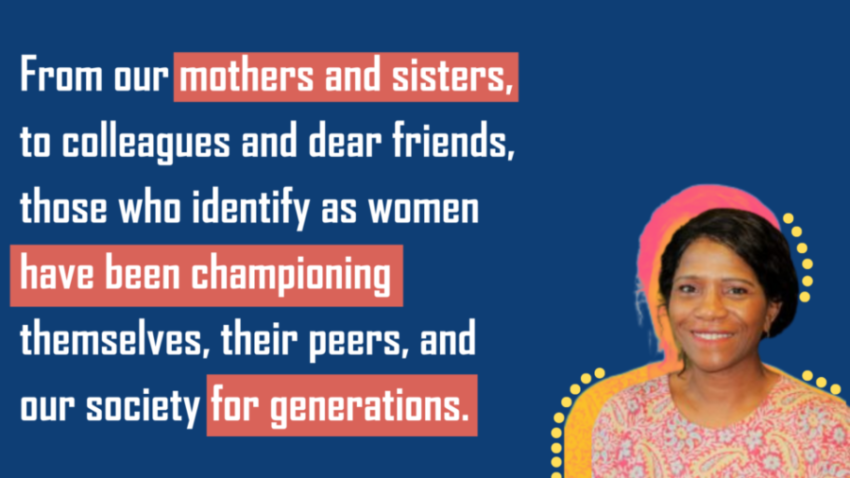
At Atlantic Street Center, where the majority of our leadership is female, we got the chance to speak with Executive Director Dr. Pela Terry. Her professional journey, coming originally form Chicago, then New York and finally Seattle, is a reminder that no matter our position in the world, we seek comfort and inspiration from the women in our lives.
The founders were deaconesses, committed to community service. This commitment was initiated with poor immigrants from Italy who needed support with many basic needs, as they received encouragement fully centered on hope and faith. Risks come with such a big decision to relocate.
Cemented in community-centric (person-centered and directed) program modeling is the key for ASC. The goal is to try to meet people where they are. Helping them is not the only goal; supporting them through direct services is how we aim to lead at present and in the future.
We see women leading many nonprofits, and we should certainly celebrate this. However, I believe there is still room for improvement in regards to respecting women as equal business leaders (since we are in the business of human services) in the form of equity on Board seats, pay equity, and succession opportunities for emerging leaders. Also, in human services the role of women leaders as solely “chiefs of charity “ is a subtle, unspoken tone that still predominates, yet does not equate with agile, efficient, and business-savvy as compared to male peers in leadership roles. This is changing, but the pace is still a bit slow. Finally, women are great narrators of non-profit ‘causes’ and legacy of community service needs and they should be continually celebrated for this.
Past: Harriet Tubman, Rosa Parks, Frida Kahlo – They had the courage to embark on what was needed and they did things their way
1. Don’t be afraid to fail. I’ve learned that when we fall down, we have to get up, dust off, and keep going. Fear of failure can become just another way of powering our fear of learning and thereby our inability to welcome growth. I love seeing messages such as “without failure, there is no growth” – it is so true.
2. Sometimes someone else (who actually may be quite better at something than you) needs an ear. Lean in and do know attentive listening. If you offer anything, it is the appreciation of what is important to them. Ask questions to gain understanding; engage the discourse with an open mind. Be open to the skills and talents of others, especially when those talents are quiet different than your own.
3. Travel… experience culture and worlds beyond what you are used to!
“Becoming” by Michelle Obama. She was touching me in her woman’s voice and it broke me. She was raised in Chicago like me, but she was on the other side of the ‘Black tracks,’ so to speak. Initially, during my school-age years, I lived on the North Side in public housing projects; she lived on the South Side…. The city was then very much segregated by race, yet neighborhood boundaries (North vs. West vs. South-siders) served an additional cultural divide in Chicago.